Dermal filler vs Botox: what's the actual difference?
By the Estetika Med Spa · · 5 min read
Botox relaxes the muscles that cause expression lines, so it works best on dynamic wrinkles like forehead lines and crow's feet. Dermal fillers add volume to areas that have lost fullness or depth, such as the cheeks, lips, and nasolabial folds. Many patients end up using both, because they address different things.
When someone types “dermal filler vs Botox” into a search bar, they are usually standing at a decision point. They have noticed something in the mirror and want to understand their options before booking anything. This article explains how each treatment works, what it tends to address, and where the two overlap, so you can walk into a consultation with a clearer picture.
How Botox works
Botox is a purified form of botulinum toxin. When injected into a specific muscle, it temporarily reduces that muscle’s ability to contract. The result, for most people, is that the skin above that muscle smooths out because the repetitive movement causing the crease is reduced.
It works on what providers call dynamic wrinkles: lines that appear when you move your face and deepen over time with repeated expression. Forehead lines, the ”11s” between the brows, and crow’s feet are the most common targets.
The FDA has approved Botox for cosmetic use in the upper face. According to the American Society of Plastic Surgeons, it is one of the most performed nonsurgical procedures in the country.
Botox quiets movement. It does not add volume or lift tissue.
How dermal fillers work
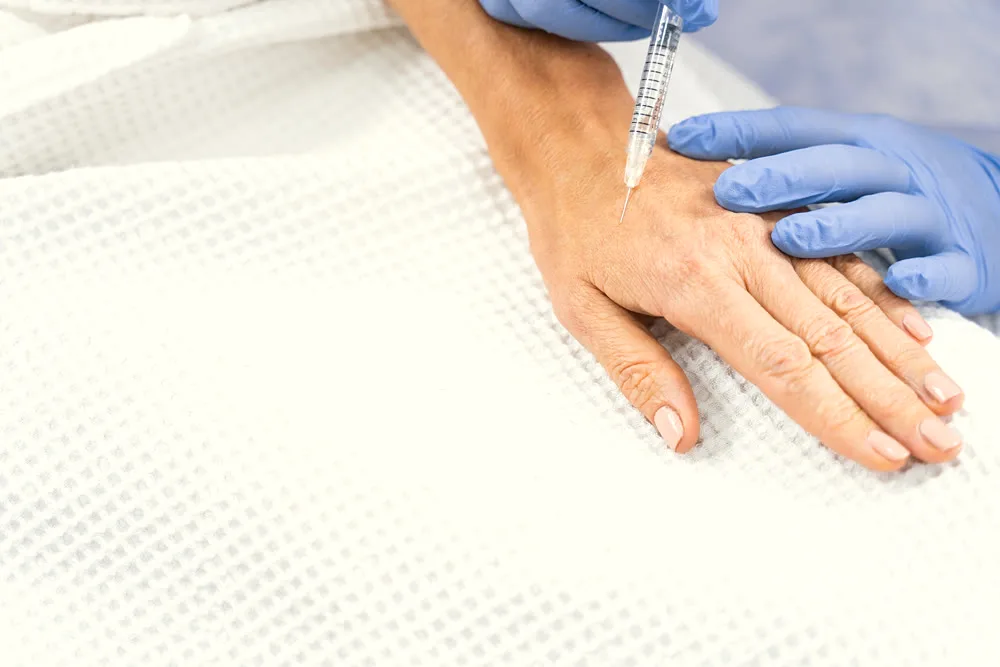
Fillers are injectable gels, most commonly made from hyaluronic acid, a substance the body produces naturally. When placed under the skin, they add volume, restore contours, or soften folds.
The targets are different from Botox. Fillers tend to address:
- Lost volume in the cheeks or temples
- Nasolabial folds (the lines from the nose to the corners of the mouth)
- Lip definition or volume
- Hollowness under the eyes
- Marionette lines at the corners of the mouth
Some products, like Sculptra or Radiesse, work differently from standard hyaluronic acid fillers. They stimulate the body’s own collagen production over time rather than adding immediate volume. Your provider can explain which product is appropriate for the area you want to address.
Where they overlap, and where they don’t
The clearest way to think about it: Botox works by relaxing. Fillers work by filling. A forehead line that appears only when you raise your eyebrows is typically a Botox case. A cheek that has lost its shape over the years is typically a filler case.
Some areas fall in between. Lip lines, for example, can involve both a loss of volume and the influence of repeated muscle movement. In those situations, a provider might recommend both products, used in different layers.
The same is true for the lower face. Chin projection, jawline softening, and corners of the mouth often respond better to filler, while certain neck and chin treatments may use Botox in smaller muscle groups.
How long results tend to last
For most people, Botox lasts approximately three to four months. After that, muscle activity gradually returns and the lines reappear. Patients who stay consistent with appointments often find that the muscle weakens slightly over time, and some report that the interval between treatments extends.
Fillers last longer, but the range is wide. A hyaluronic acid lip filler may last six to nine months. A cheek filler placed deeper may hold for a year or more. Products like Sculptra work over several months and the results tend to persist longer because they depend on collagen, which the body builds gradually.
These are ranges, not promises. How long a treatment lasts depends on the product, the area, your metabolism, and how your body responds.
What the treatment experience looks like
A Botox appointment is quick. The injections take a few minutes, the needle is very fine, and there is no recovery period. Most patients return to their day immediately. The effect becomes visible over several days, not immediately.
Filler appointments take a bit longer depending on the area. The injector places the product carefully, checks symmetry, and may adjust during the session. Some swelling and mild bruising can appear afterward, and it usually resolves within a few days for most people. Lips tend to swell more than other areas initially.
Both treatments are done without general anesthesia. You are awake, and the provider adjusts based on your feedback during the session.
Who is not a good candidate
Neither treatment is appropriate for everyone. The American Academy of Dermatology notes that injectables are not recommended during pregnancy or breastfeeding.
People with certain neuromuscular conditions should avoid Botox. Anyone with a known allergy to hyaluronic acid or any components in the filler product should disclose that before treatment.
Fillers are also not the right tool for significant skin laxity or structural changes that go beyond what an injectable can address. If the concern involves significant tissue sagging or a structural issue, a surgical evaluation may be more appropriate. A good provider will tell you when an injectable is unlikely to give you what you are hoping for.
If you are on blood thinners or have a history of keloid scarring, those details matter in your consultation. Bring a full list of medications and supplements.
Combining both treatments
Many patients at Estetika receive both in the same visit. A provider assessing the full face might use Botox in the upper face for expression lines and filler in the mid-face or lips for volume. The two products do not interfere with each other.
This is sometimes called a “liquid lift,” though results depend on the individual anatomy and what is realistic given the skin’s current condition. You can read more about our injectable treatments and what a full-face assessment involves.
If you are also curious about how injectables fit into a broader skin care plan, the treatments overview covers the range of services we have at the clinic.
The best way to know which option fits your situation is to be seen in person. At Estetika Med Spa in Hallandale Beach, a provider looks at your face, listens to what you want to address, and tells you honestly what is realistic. Book your consultation and we will take it from there.
Frequently asked questions
Can you get Botox and fillers at the same time?
Yes, many patients receive both in the same appointment. A provider will assess which areas benefit from muscle relaxation and which need volume before combining treatments. The two products do not interfere with each other.
Which lasts longer, Botox or dermal filler?
For most people, Botox tends to last three to four months before a touch-up is needed. Dermal fillers generally last longer, often six months to over a year depending on the product and the area treated. Individual results vary.
Does getting filler hurt more than Botox?
Most patients find both manageable. Botox involves very fine needles and takes only a few minutes. Filler injections can involve slightly more pressure depending on the area, and many filler products include lidocaine to reduce discomfort during the procedure.
Will I look unnatural if I get filler?
That depends largely on the amount used and the injector's technique. A conservative approach, adjusted to your facial structure, tends to produce results that look refreshed rather than overdone. A thorough consultation before treatment helps set realistic expectations.
Is Botox only for wrinkles?
Botox has several FDA-approved uses beyond cosmetic wrinkle treatment, including hyperhidrosis (excessive sweating) and certain migraine conditions. In an aesthetic context, it is most commonly used to soften expression lines in the upper face.
Sources
- U.S. Food and Drug Administration
- American Academy of Dermatology
- American Society of Plastic Surgeons
Educational content. It does not replace a medical consultation at Estetika Med Spa.
Keep reading

Where to have it done in South Florida
Estetika is at 400 E Hallandale Beach Blvd, Hallandale Beach, Florida, 8 minutes from Aventura. Many patients also drive in from Hollywood, 11 minutes away. Consultations are in English or Spanish.