What Pigmentation & Vascular is
This treatment uses targeted light energy against the two most common complexion complaints: excess pigment, sun spots, age spots, uneven patches, and small visible vessels, broken capillaries, redness around the nose, spider veins on the face. The energy is absorbed selectively by the target, pigment or blood vessel, and breaks it down so your body clears it, leaving the surrounding skin untouched. It is precision work: the goal is even, calm, uniform skin.
How it works
Different wavelengths seek different targets: melanin absorbs one range, hemoglobin another. The pulse heats the target past its tolerance in a fraction of a second, too fast for surrounding tissue to be affected. Fragmented pigment rises and flakes off; treated vessels collapse and are reabsorbed.
The procedure, step by step
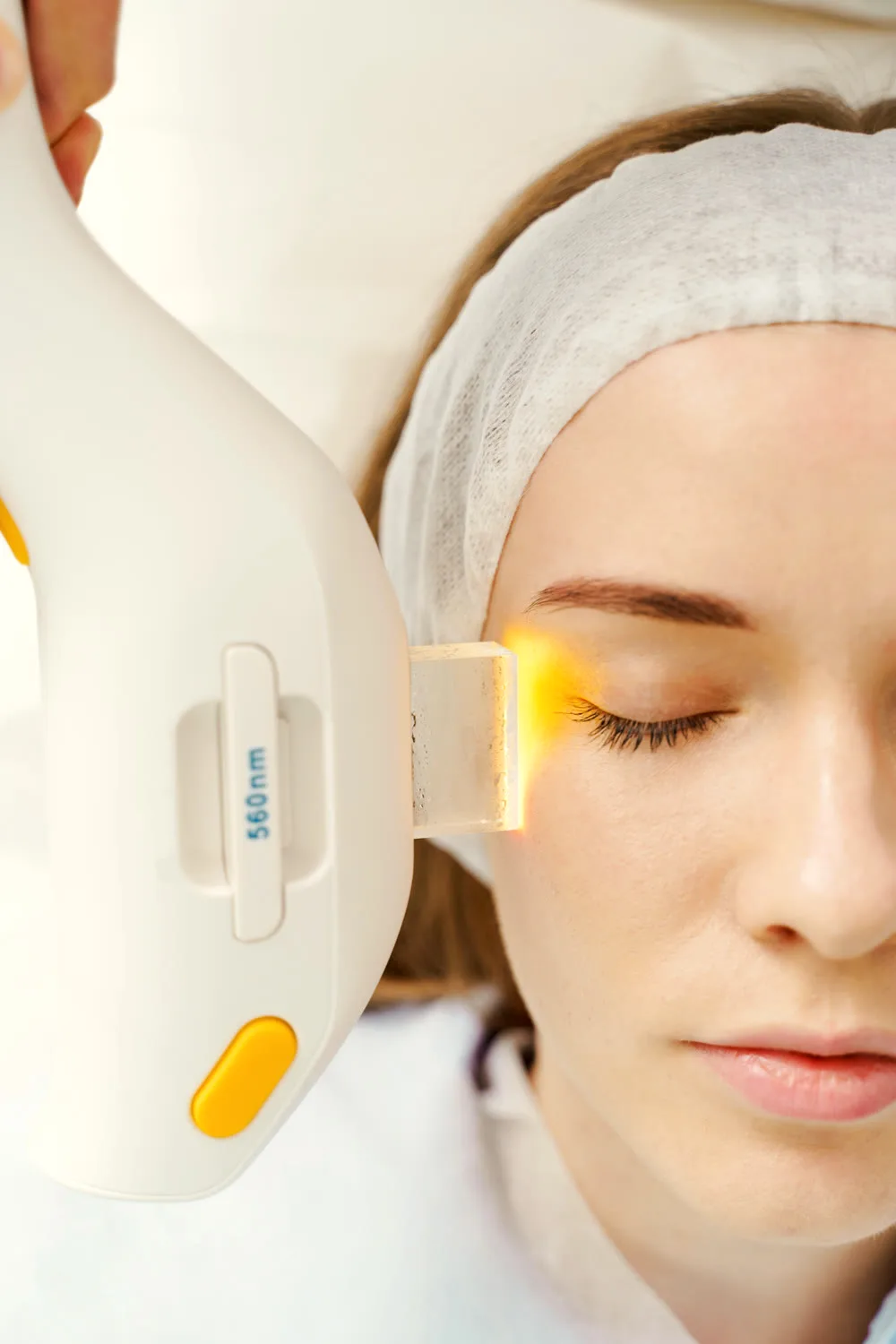
After cleansing and eye protection, the handpiece delivers pulses over each spot or vessel; sensation is a series of quick warm snaps. Sessions run 20 to 40 minutes depending on how much territory we cover. No numbing is usually needed.
What to expect after
Spots typically darken first, like coffee grounds on the skin, then flake off across one to two weeks; that darkening means the treatment landed. Vessels may vanish immediately or fade progressively. Mild redness settles the same day.
Results and maintenance
Skin tone looks visibly more uniform once the flaking completes. Stubborn pigment usually takes two to three sessions about a month apart; vascular work often needs one or two. Sun protection afterward is what keeps the result, new sun makes new spots.
Care and limits, honestly
Melasma is a special case, the wrong energy can make it worse, so diagnosis comes before any flash of light; sometimes the right plan is peels and topicals instead. Recent tanning postpones treatment. Raised, changing or irregular spots get referred for medical evaluation first, always.