Red light therapy for skin: what it does and what to expect
By the Estetika Med Spa · · 4 min read
Red light therapy for skin delivers specific wavelengths of light, typically in the red and near-infrared range, to the deeper layers of the skin. It does not cut, heat, or damage the surface. For most people, it is associated with gradual improvements in texture, tone, and firmness over a series of sessions, though results vary and no single treatment works the same for everyone.
If you have been searching red light therapy for skin, you are probably weighing whether the technology is real or just another trend. The short answer: it is a non-invasive treatment that uses specific wavelengths of light to reach below the skin’s surface, and it has been studied for several years for its effects on collagen, inflammation, and wound healing. What it does not do is produce immediate, dramatic change overnight.
How red light therapy works
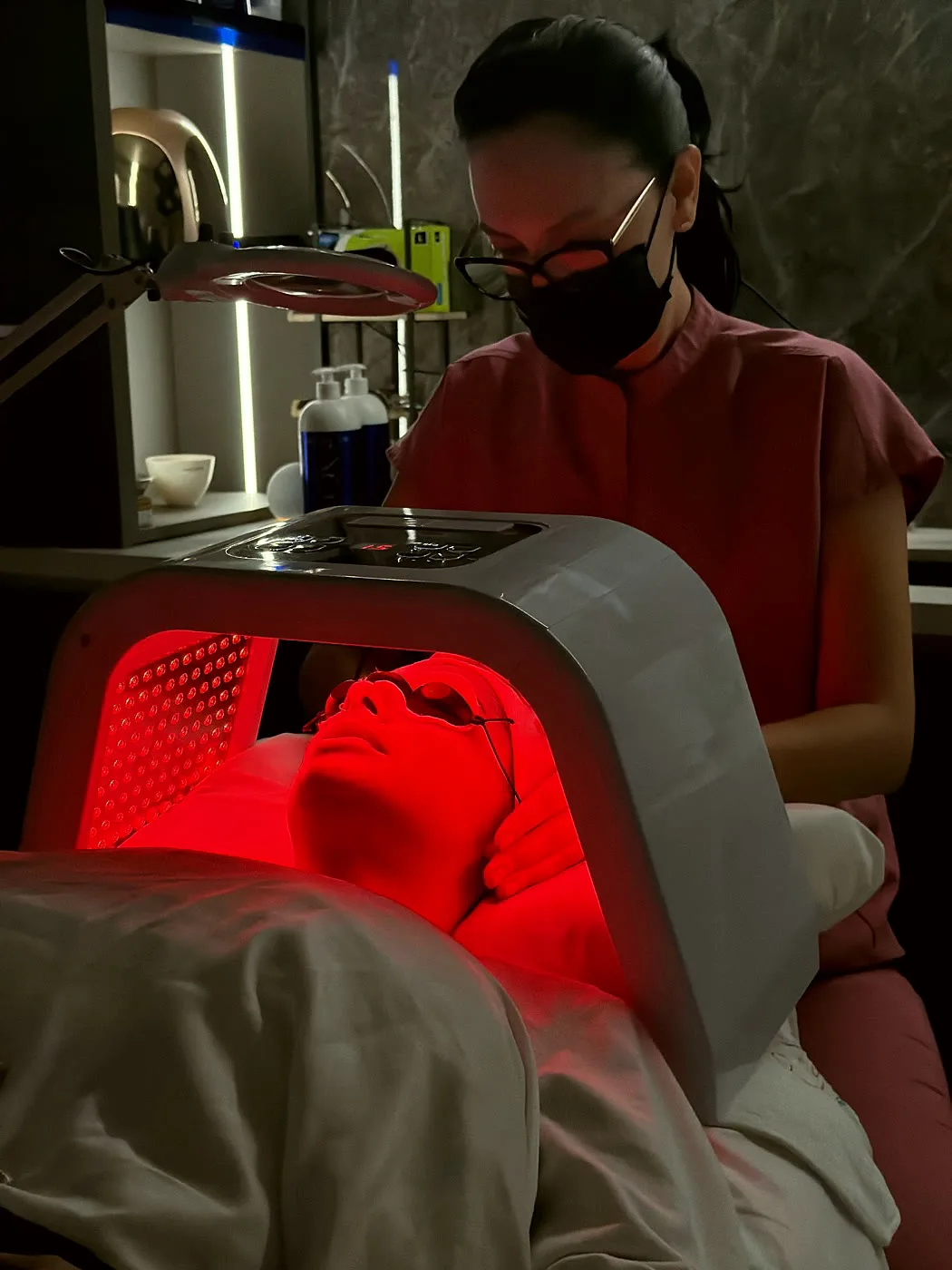
Red light therapy, sometimes called photobiomodulation, exposes the skin to wavelengths in the red and near-infrared spectrum. These wavelengths penetrate deeper than visible light and are absorbed by cells in a way that is thought to support their energy production.
The result, according to the Cleveland Clinic, is a potential increase in collagen synthesis and a reduction in cellular stress. The skin does not heat to the point of damage. There is no ablation, no peeling, and no wound to heal.
Sessions are typically quiet and hands-off. The patient lies still while a panel or device is positioned over the treatment area. Most sessions last under thirty minutes.
What red light therapy may improve
The skin concerns most often addressed with this treatment include:
- Fine lines and early signs of skin laxity
- Uneven texture or dullness from slower cell turnover
- Mild inflammation, including redness associated with rosacea
- Post-procedure recovery, where it is sometimes used alongside other treatments
- Acne-related inflammation, particularly in mild to moderate cases
The American Academy of Dermatology recognizes light-based therapies as part of the range of options for acne management. For fine lines and texture, the evidence base is more observational, but many patients do report visible improvement over a consistent series.
At Estetika, red light therapy is viewed as part of a longer plan, not a one-session fix. A good outcome depends on the right combination of treatments for that specific skin.
How it fits with other treatments
Red light therapy works well alongside procedures that address the skin’s surface directly. A HydraFacial, for example, clears pores and prepares the skin, while red light therapy works at a cellular level below. They target different layers and do not compete.
The same logic applies when someone is using injectables. Sculptra, which stimulates collagen over time, and red light therapy both work through collagen pathways but through different mechanisms. A provider can advise whether combining them makes sense for your goals.
For patients looking at a full treatment plan, the laser and light treatments page at Estetika gives an overview of how these modalities fit together.
What to expect in a series of sessions
Single sessions are not how this treatment is typically structured. For most people, a course of several sessions spread over weeks is what allows the skin to respond. Changes in texture or tone tend to appear gradually.
There is no downtime. Most patients go directly back to their day. Mild warmth or flushing at the treatment site usually resolves within an hour. Sun protection after sessions is standard practice.
The U.S. Food and Drug Administration has cleared certain red light therapy devices for specific uses, including temporary relief of minor pain and skin texture concerns. Clearance means the device has met a defined safety and efficacy standard for those indications.
Who this treatment is not for
Red light therapy is not the right choice for every skin concern or every person. It will not address significant skin laxity that has progressed to the point where a structural change is needed. It will not remove pigmented lesions, broken capillaries, or tattoos.
People who are pregnant, have photosensitive conditions, take photosensitizing medications, or have certain hormonal disorders should not use this treatment without medical clearance. Anyone with active skin cancer in or near the treatment area should not proceed.
If the goal is to reduce a specific wrinkle, tighten a jawline, or address volume loss, injectables or more targeted procedures will produce faster, more specific results. Red light therapy is not a substitute for those.
Who tends to benefit most
Patients in the early stages of skin aging, those dealing with mild acne inflammation, or those looking to support recovery after another procedure tend to see the most consistent benefit. It also works well for people who want an ongoing maintenance option between more intensive treatments.
It is not a dramatic intervention. That is by design. The goal is to give the skin consistent, low-level support over time rather than a single high-impact session.
What the consultation covers
Before starting a series, a provider at Estetika will look at your skin type, your current routine, and any treatments you are already doing. You can also review what a full skin assessment includes before your appointment.
Pricing and the recommended number of sessions are discussed at that visit, not listed in advance, because the plan depends on what the skin actually needs.
If you are ready to find out whether red light therapy fits your skin goals, the clearest next step is a one-on-one assessment. You can book a consultation and go over your options with someone who can look at your skin directly.
Frequently asked questions
How many red light therapy sessions does it take to see results?
Most people notice changes after several weeks of consistent sessions rather than after a single visit. The number depends on the skin concern, the device used, and how the individual responds. A provider can give a more realistic estimate after reviewing your skin.
Is red light therapy safe for all skin tones?
Red light therapy is generally considered appropriate across a wide range of skin tones because it does not rely on targeting pigment the way some laser treatments do. That said, a qualified provider should assess your skin before starting any treatment plan to confirm it is the right fit.
Can red light therapy replace Botox or fillers?
No. Red light therapy works at the cellular level to support collagen over time, while injectables like Botox or Sculptra address muscle movement or volume loss directly. They target different concerns and are sometimes used together as part of a broader plan.
Does red light therapy help with acne?
Some studies suggest red light therapy may help reduce inflammation associated with acne, and the American Academy of Dermatology recognizes light-based therapies as one option in acne management. It is more commonly used for mild to moderate cases and is not a standalone solution for severe acne.
Is there any downtime after red light therapy?
For most people, there is no downtime. The treatment is non-ablative, meaning it does not break the skin surface. Redness or mild warmth immediately after a session typically resolves within an hour.
Sources
Educational content. It does not replace a medical consultation at Estetika Med Spa.
Keep reading
Where to have it done in South Florida
Estetika is at 400 E Hallandale Beach Blvd, Hallandale Beach, Florida, 8 minutes from Aventura. Many patients also drive in from Hollywood, 11 minutes away. Consultations are in English or Spanish.