Laser hair removal on darker skin: what you need to know
By the Estetika Med Spa · · 4 min read
Laser hair removal on darker skin works well when the clinic uses a long-wavelength laser, most often Nd:YAG 1064 nm, which bypasses melanin in the outer layers and targets the follicle directly. The risk of burns or pigmentation changes is real with the wrong device, but with the right technology and a trained provider, most patients with medium to deep skin tones complete a full series without complications.
If you have brown, olive, or deep skin and you’ve been told laser hair removal isn’t for you, you’ve probably heard outdated advice. Laser hair removal on darker skin is a different procedure than what works on fair skin, and the difference is the device. When the clinic uses the right technology, most patients with medium to deep skin tones complete a full series without burns or permanent pigmentation changes.
Why skin tone matters with laser
Lasers work by targeting pigment in the hair follicle. The problem is that melanin also lives in the surrounding skin, and a device calibrated for pale skin will hit both at once. For patients with more melanin, that means a higher chance of burns, blistering, or post-inflammatory hyperpigmentation.
The solution is wavelength. Longer wavelengths, particularly 1064 nm Nd:YAG, travel deeper into the skin and bypass the surface melanin while still reaching the follicle. According to the American Academy of Dermatology, Nd:YAG lasers are the preferred option for patients with darker skin tones because of this deeper penetration.
The technology Estetika uses
Not every clinic has the right equipment. A facility that treats a diverse patient population needs devices that were tested and cleared for a range of skin tones.
The device that works on one patient may cause a burn on the next. Matching the technology to the skin is the first decision, not an afterthought.
For patients with deeper skin tones, the consultation at Estetika includes a skin-type assessment before any laser is scheduled. The provider reviews Fitzpatrick scale classification, hair color and texture, and recent sun exposure before selecting settings. You can learn more about the full range of laser treatments available at the clinic.
What to expect during a session
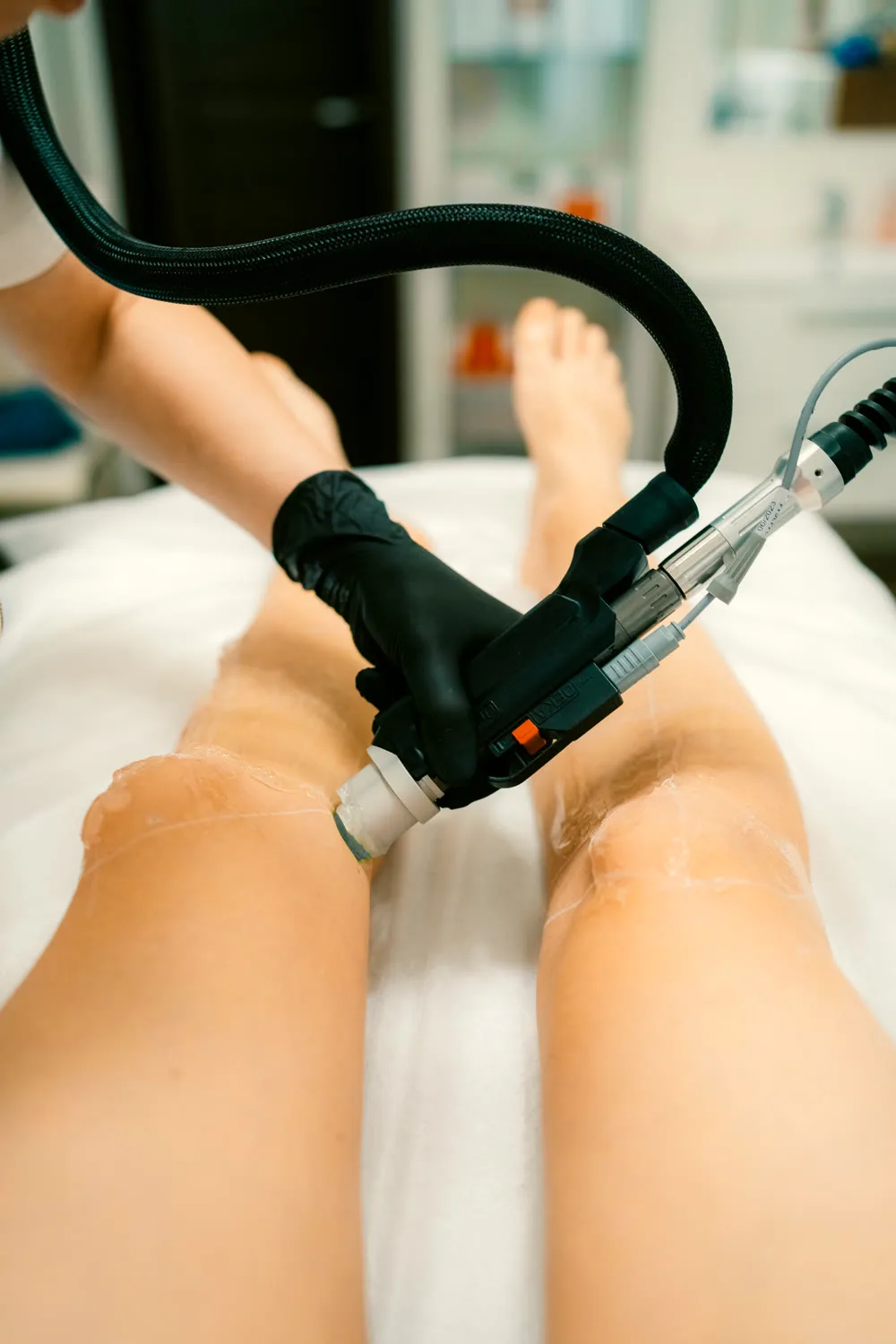
Sessions follow the same general steps regardless of skin tone. The area is shaved beforehand, a cooling tip or gel is applied, and the laser pulses across the skin in a systematic pattern. Most patients describe a quick snap of heat with each pulse, and the sensation is usually well-tolerated.
For darker skin, providers typically use lower energy per pulse and extend the pulse duration. This gives the heat time to dissipate from the surface while still disabling the follicle. It is a slower approach, but it is also a safer one.
After the session, the skin may look slightly pink or feel warm for a few hours. Most people return to their regular routine the same day.
How many sessions to expect
Hair grows in cycles, and the laser only affects follicles in the active growth phase. That is why a single session never catches everything. For most patients, a series of six to eight sessions spaced four to eight weeks apart produces substantial reduction in hair regrowth.
Results vary. Coarse, dark hair on a lighter area of the body tends to respond faster than fine or gray hair anywhere. Hormonal conditions can also affect how well the results hold over time. A provider can give a more specific estimate after seeing the area in person.
Risks that are specific to darker skin
The main risk is post-inflammatory hyperpigmentation, which is temporary darkening of the treated skin. It happens when the surface absorbs too much energy. With the correct laser and settings, this risk is manageable for most patients, but it is worth understanding before you start.
Burns and blistering are possible when the wrong device is used or when a patient has had recent sun exposure. The Cleveland Clinic recommends avoiding direct sun for several weeks before and after laser treatments, particularly for patients with higher melanin levels.
Signs that the settings may be off include:
- Blistering within 24 hours of treatment
- Skin that looks uniformly darker across the treated area rather than just red
- Pain that continues past the first day
If any of these appear, contact the clinic before your next session.
Preparing your skin before treatment
Preparation makes a real difference in outcome and safety. Two weeks before each session, the skin should be free of:
- Sun exposure and self-tanner
- Waxing, threading, or plucking (shaving is fine)
- Retinoid creams or exfoliating acids, unless your provider clears them
On the day of the session, the area should be clean and freshly shaved. Numbing cream is available if you want it, and your provider will ask about any medications that could affect how the skin reacts to heat.
Who this treatment may not be right for
Laser hair removal works best when there is contrast between hair color and skin. Very light or white hair contains little melanin, which means the laser has nothing to target, regardless of skin tone. Patients with predominantly gray or blonde hair are unlikely to see the same results as someone with dark hair.
It is also not the right moment for anyone with active sunburn, a recent chemical peel, or certain skin conditions in the treatment area. Pregnancy is another reason to wait. Your provider will go through the full intake during the consultation to confirm whether the timing is right for you.
Laser hair removal does not address underlying hormonal causes of excess hair growth. Patients with polycystic ovary syndrome or similar conditions may need more sessions than average and should have a conversation with their physician alongside any aesthetic treatment plan.
If you’d like to know whether your skin tone and hair type are a good fit for laser at Estetika, the best next step is a quick conversation with one of our providers. Book your consultation and come in with your questions.
Frequently asked questions
Is laser hair removal safe for dark skin?
Yes, when the clinic uses a laser designed for higher melanin levels, most often an Nd:YAG 1064 nm device. The risk comes from using the wrong wavelength, which can burn or discolor the skin. A proper consultation and skin-type assessment before the first session reduce that risk significantly.
How many sessions does laser hair removal take on darker skin?
Most patients need between six and eight sessions to see substantial reduction. Sessions are spaced several weeks apart to catch each follicle in its active growth phase. The exact number depends on the area, hair texture, and how the skin responds.
Does laser hair removal hurt more on darker skin?
Discomfort varies by person and body area, not by skin tone alone. Most devices used for darker skin include a cooling tip or contact cooling that makes the session more tolerable. Patients typically describe it as a quick snap or mild heat at each pulse.
Can laser hair removal cause dark spots on brown or Black skin?
It can, if the wrong laser or settings are used. Hyperpigmentation is the most common side effect when the device is not matched to the patient's skin tone. A qualified provider adjusts wavelength and energy levels to minimize that risk, and any temporary darkening usually fades within weeks.
What should I avoid before a laser hair removal session on dark skin?
Avoid sun exposure, self-tanner, and waxing for at least two weeks before the session. The skin should be shaved, not plucked, so the follicle stays intact. Retinoids and certain topicals may also need a pause, which your provider will confirm during the consultation.
Sources
Educational content. It does not replace a medical consultation at Estetika Med Spa.