Facial balancing near Miami: what it is and what to expect
By the Estetika Med Spa · · 4 min read
Facial balancing uses neuromodulators and dermal fillers to bring the proportions of the face into better visual harmony. It does not change bone structure. Results for most people last several months and depend on the product used, the areas treated, and how each patient metabolizes injectables. A licensed injector assesses facial anatomy in person before recommending anything.
If you have been looking up facial balancing near the Miami area and are not sure whether it is a real clinical approach or a marketing phrase, the short answer is: it is a real approach, and it is worth understanding before you book anything. The idea behind it is that the face reads as more or less harmonious depending on how its regions relate to one another, and that injectables can adjust those relationships without surgery.
What the term actually means
Facial balancing is not a single product or a fixed protocol. It is a method of assessment. The injector looks at the face in thirds: the forehead and brow, the midface, and the lower face including the chin and jawline. When one region is pulling visual weight disproportionately, the face can look tired, heavy, or undefined even though nothing is technically “wrong.”
The goal is proportion, not perfection. A skilled injector works toward a face that reads as rested and defined, not toward an ideal that ignores the patient’s natural anatomy.
What products are used
Most facial balancing sessions draw from two categories: neuromodulators and dermal fillers.
Neuromodulators such as Botox or Dysport relax muscles that are pulling the face in directions that change its apparent shape. A jaw that looks very wide due to masseter activity, for example, may respond to treatment in that muscle.
Fillers add or restore volume in specific areas. Products like Sculptra or Radiesse work differently at the tissue level than hyaluronic acid fillers do. Which product is appropriate depends on the area, the depth of treatment needed, and the patient’s anatomy. That decision happens in person, not from a photo.
At Estetika, the assessment comes before the syringe. We look at the whole face before touching anything.
The areas most often addressed
Facial balancing can involve several regions, though not every patient needs all of them:
- The chin, which when underprojected can make the nose appear larger and the neck less defined
- The jawline, where filler can add structure along the angle and ramus
- The temples, which hollow with age and affect how the upper face sits
- The nose bridge or tip, using liquid rhinoplasty technique in appropriate candidates
- The prejowl area, where early sagging can be softened before it becomes a surgical concern
The injector maps which of these areas, if any, will produce a meaningful change for a specific patient. More product does not automatically mean a better result.
What to expect during and after the session
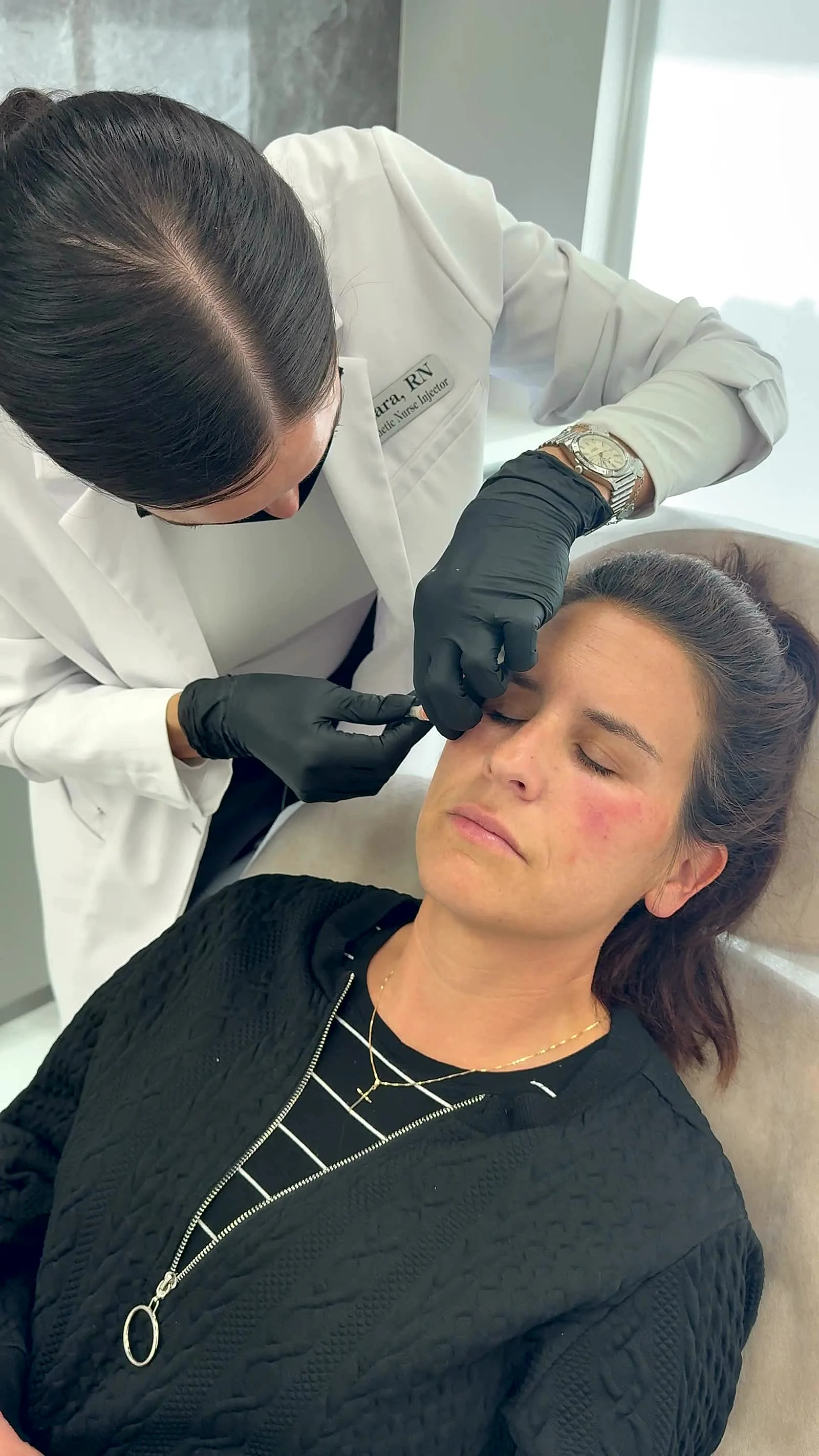
A facial balancing appointment at a clinic like Estetika Med Spa in Hallandale Beach typically begins with photographs and a conversation about what the patient wants to address. The injector explains the anatomy they are working with and what they expect each product to do.
The injections themselves are brief. Swelling and mild bruising are common in the day or two afterward, particularly with filler. Most patients return to normal activity the same day, though social plans right after the appointment depend on how the patient responds to treatment.
Results from neuromodulators for most people become visible within a few days to two weeks. Filler results are more immediate, though initial swelling means the final appearance takes a few days to settle.
For patients in Aventura or Hollywood FL who are considering this for the first time, it is worth knowing that facial balancing is iterative. The first session establishes a baseline. Follow-up appointments, if needed, refine the result based on how the patient responded.
What facial balancing does not do
This is where expectations matter. Facial balancing with injectables does not change bone structure. A receding chin that is skeletal in origin, a jaw that is structurally narrow, or a nose with significant cartilage deviation: these are not problems that injectables resolve, though they can sometimes soften the appearance.
It also does not address skin quality. Texture, pigmentation, and laxity are separate concerns. A patient who wants overall facial improvement may also benefit from skin treatments, but those are planned separately. You can explore the full range of options on the treatments page.
Facial balancing is also not a single-session fix for advanced volume loss. Patients with significant changes from aging may see a more complete result over multiple sessions, which the injector will discuss during assessment.
Who this is not for
Patients who are pregnant or breastfeeding should not receive neuromodulators or most injectable fillers. Patients with certain neuromuscular conditions should discuss their medical history with the injector before any treatment.
Anyone expecting surgical-level structural change from injectables will likely be disappointed. The appropriate candidates for facial balancing are patients with anatomy that responds to volume or muscle relaxation: not patients whose concerns require repositioning or removing tissue.
If you have had complications from fillers in the past, that history matters. Disclose it fully at consultation.
Why technique matters more than product
The American Society of Plastic Surgeons and the American Academy of Dermatology both point to injector training and anatomical knowledge as the primary safety variable in injectable treatments. The products approved by the U.S. Food and Drug Administration for these uses have defined safety profiles; the variability comes from how and where they are placed.
A clinic that takes the time to assess anatomy before deciding on a plan is doing the job correctly. One that leads with product volume or package pricing is not.
The injectable treatments at Estetika are done by trained injectors who work from anatomy first. That applies to every facial balancing session.
If you are ready to see whether facial balancing is appropriate for your anatomy, the next step is a personalized assessment. You can schedule your visit and talk through what you want to address before any treatment is planned.
Frequently asked questions
What is facial balancing and how is it different from just getting filler?
Facial balancing looks at the face as a whole rather than treating one area in isolation. The injector maps how the forehead, nose, chin, and jawline relate to each other, then uses neuromodulators or fillers to improve those relationships. Getting filler in one spot without that map can look uneven over time.
Does facial balancing hurt?
Most patients describe mild pressure or a brief sting during injection. Topical numbing cream is applied before the session in most clinics. Discomfort varies by area and by how sensitive the patient is.
How long do facial balancing results last?
For most people, results from neuromodulators tend to last three to four months. Filler in areas like the chin or jawline often lasts longer, though this varies by product and individual metabolism. Your injector can give you a more specific estimate after assessing your anatomy.
Can facial balancing fix an asymmetric nose without surgery?
Injectable techniques can soften the appearance of a nasal bump or adjust the perceived angle of the nose tip in some patients. This is sometimes called a liquid rhinoplasty. It does not change bone or cartilage and is not a substitute for surgical rhinoplasty in patients with significant structural concerns.
Is facial balancing safe for darker skin tones?
The injectables used, such as Botox, Dysport, or hyaluronic acid fillers, work the same way regardless of skin tone. The safety profile is tied to the injector's technique and the product used, not to skin color. Patients with any skin tone should discuss their full medical history at consultation.
How much does facial balancing cost in the Miami area?
Pricing at Estetika Med Spa is reviewed at the consultation appointment, since the number of areas and products varies for each patient. Visiting the clinic for a personalized assessment is the right starting point.
Sources
- American Society of Plastic Surgeons
- American Academy of Dermatology
- U.S. Food and Drug Administration
Educational content. It does not replace a medical consultation at Estetika Med Spa.
Keep reading

Where to have it done in South Florida
Estetika is at 400 E Hallandale Beach Blvd, Hallandale Beach, Florida, 8 minutes from Aventura. Many patients also drive in from Hollywood, 11 minutes away. Consultations are in English or Spanish.