Dermaplaning at home vs professional: what actually differs
By the Estetika Med Spa · · 4 min read
Professional dermaplaning removes dead skin cells and vellus hair using a surgical-grade scalpel in a controlled setting, which reaches a level of exfoliation that home dermaplaning tools are not designed to replicate. At-home devices can maintain results between sessions, but they work at a shallower depth. For most people, the two approaches are not interchangeable.
If you’ve been looking at dermaplaning at home vs professional treatment, you’re probably trying to figure out whether the clinic visit is actually worth it or whether a $15 blade from the drugstore does the same thing. The short answer is that they work on different layers of the skin, and understanding that difference changes how you plan your routine.
What dermaplaning actually does
Dermaplaning removes the outermost layer of dead skin cells along with the vellus hair, the fine, colorless fuzz that covers most of the face. When that layer is gone, skincare products absorb more readily, makeup sits more evenly, and the skin surface looks brighter.
The tool matters more than most people expect. A professional provider uses a surgical-grade scalpel held at a precise angle. That angle, combined with the blade’s edge, allows the provider to reach a level of exfoliation that consumer devices are built to avoid for safety reasons.
How home dermaplaning works
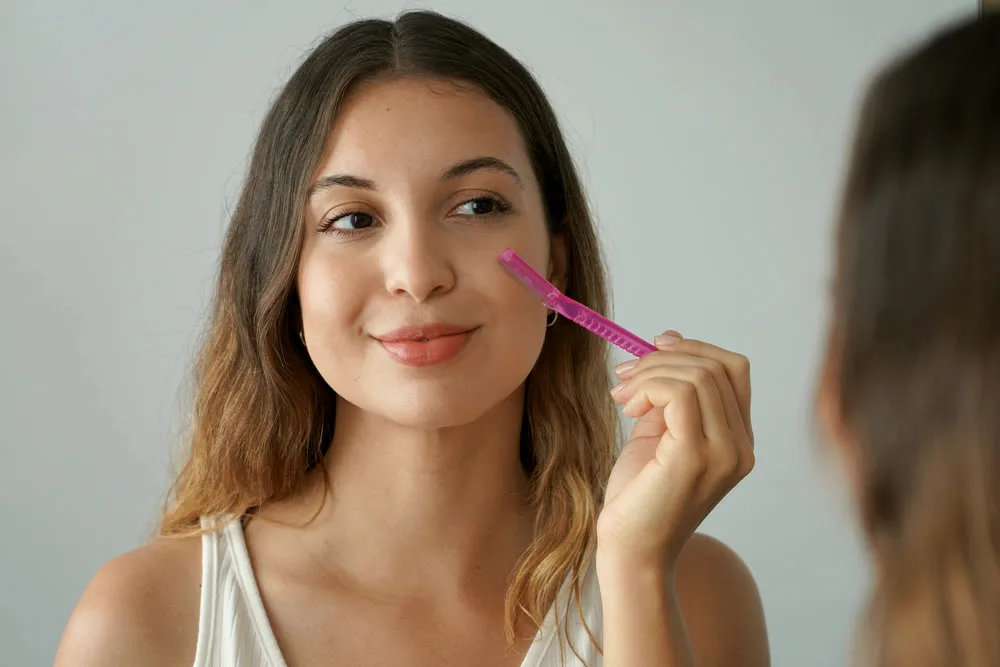
Home dermaplaning tools typically have a guarded or angled blade that limits penetration to the very top of the stratum corneum. That is intentional. Without the training to read skin texture, manage pressure, and adjust for different facial zones, going deeper would cause consistent irritation or injury.
For most people, home devices do produce a noticeable smoothing effect. The skin feels softer, and vellus hair is removed. But the depth of exfoliation is shallower, and the results tend to fade faster than professional treatment.
At-home tools work best as maintenance. Professional dermaplaning is a different procedure, not just a stronger version of the same one.
What changes in a clinical setting
A licensed provider does more than hold a sharper blade. Before the treatment begins, they assess the skin for contraindications: active breakouts, thinness, sensitivity, or conditions that would make dermaplaning the wrong choice that day. That assessment doesn’t happen with an at-home tool.
During the procedure, the provider adjusts technique by zone. The forehead, cheeks, and upper lip each have different skin thickness and hair density. Pressure and angle shift accordingly. After the treatment, the skin is ready to absorb active ingredients at a higher rate, which is why professional dermaplaning is often paired with treatments like a HydraFacial or a VI Peel to extend the results.
Comparing the two options
| At-home dermaplaning | Professional dermaplaning | |
|---|---|---|
| Depth of exfoliation | Surface only | Deeper, controlled by the provider |
| Risk of irritation | Lower (guarded blade) | Low when done by a licensed provider |
| Results duration | A few days to one week | Two to four weeks for most people |
| Pairing with actives | Not recommended immediately after | Often paired with serums or peels |
| Frequency | Varies by product; check instructions | Every three to four weeks |
The hair regrowth question
The American Academy of Dermatology has noted that removing hair at the skin’s surface does not alter the follicle or change how the hair grows back. Vellus hair returns at the same color and texture after dermaplaning, whether done at home or in a clinic. This concern comes up often, and the answer is consistent.
Who should not do this, at home or in a clinic
Dermaplaning is not appropriate for everyone.
- People with active acne should wait until breakouts clear. Dragging a blade over inflamed skin spreads bacteria and worsens irritation.
- Rosacea patients, especially during a flare, should speak with a dermatologist before trying either version.
- Skin with open wounds, sunburn, or recent resurfacing procedures needs time to heal first.
- People with very thin or compromised skin barriers may need a different exfoliation method entirely.
This list applies to both home and professional dermaplaning. The clinical setting adds a screening step that catches these situations before anything touches the skin, but the contraindications themselves don’t change based on where the treatment happens.
What professional dermaplaning does not replace
Dermaplaning, in any form, does not address pigmentation at a cellular level, stimulate collagen, or treat acne at its root. If those are the goals, other treatments are better suited. The Cleveland Clinic notes that dermaplaning is primarily a surface exfoliation method, and patients with deeper skin concerns often combine it with other procedures rather than relying on it alone.
It also doesn’t produce the same results across all skin tones. People with darker skin tones should consult a provider experienced with their skin type, since improper technique can cause post-inflammatory changes.
Planning your approach
A practical routine for many people is to use a home dermaplaning tool between clinic visits, spacing professional treatments every three to four weeks. That rhythm follows the skin’s natural cell turnover cycle and keeps the benefits more consistent over time.
Before deciding on that schedule, it’s worth understanding your skin’s current condition. If you’re dealing with sensitivity, recent sun exposure, or a reactive skin type, those factors affect which option is right and how often either should be done.
You can review additional treatment options and what to expect from a skin care visit in the treatments section of the site.
If you’d like to talk through whether professional dermaplaning is the right step for your skin, a consultation at Estetika is where that conversation starts. A provider can look at your skin in person and give you a clear picture of what to expect.
Frequently asked questions
Is dermaplaning at home as effective as getting it done professionally?
Home dermaplaning tools exfoliate the very surface of the skin, while professional dermaplaning uses a surgical-grade scalpel that works at a deeper level. The results tend to look different: professional treatment usually produces a smoother texture that lasts longer. For maintenance between clinic visits, home tools can help, but they are not the same procedure.
Can dermaplaning at home cause cuts or scarring?
Home dermaplaning blades are designed with safety guards that limit how deep they can go, which reduces the risk of cuts compared to a scalpel. That said, pressing too hard, using a dull blade, or working on active breakouts can still irritate the skin. A licensed provider controls angle, pressure, and technique in ways that are difficult to replicate at home.
How often can you do dermaplaning at home versus in a clinic?
Most skin care providers suggest professional dermaplaning every three to four weeks, which aligns with the skin's natural cell turnover cycle. Home tools are gentler and some people use them more frequently, though overuse can lead to irritation. The right cadence depends on your skin type, and a provider can give you a specific recommendation after a consultation.
Does dermaplaning make hair grow back thicker?
No. Vellus hair, the fine peach fuzz removed during dermaplaning, grows back at the same texture and color after treatment. This applies to both professional and at-home dermaplaning. The American Academy of Dermatology confirms that shaving or removing hair at the surface does not change its structure or thickness as it regrows.
Who should avoid dermaplaning altogether, at home or in a clinic?
People with active acne, rosacea flare-ups, or open wounds should wait until the skin has healed before trying dermaplaning in any form. Those with certain skin conditions, such as psoriasis or eczema in the treatment area, may not be good candidates. A dermatologist or licensed esthetician can assess your skin and tell you whether dermaplaning is appropriate.
Sources
Educational content. It does not replace a medical consultation at Estetika Med Spa.
Keep reading
Where to have it done in South Florida
Estetika is at 400 E Hallandale Beach Blvd, Hallandale Beach, Florida, 8 minutes from Aventura. Many patients also drive in from Hollywood, 11 minutes away. Consultations are in English or Spanish.