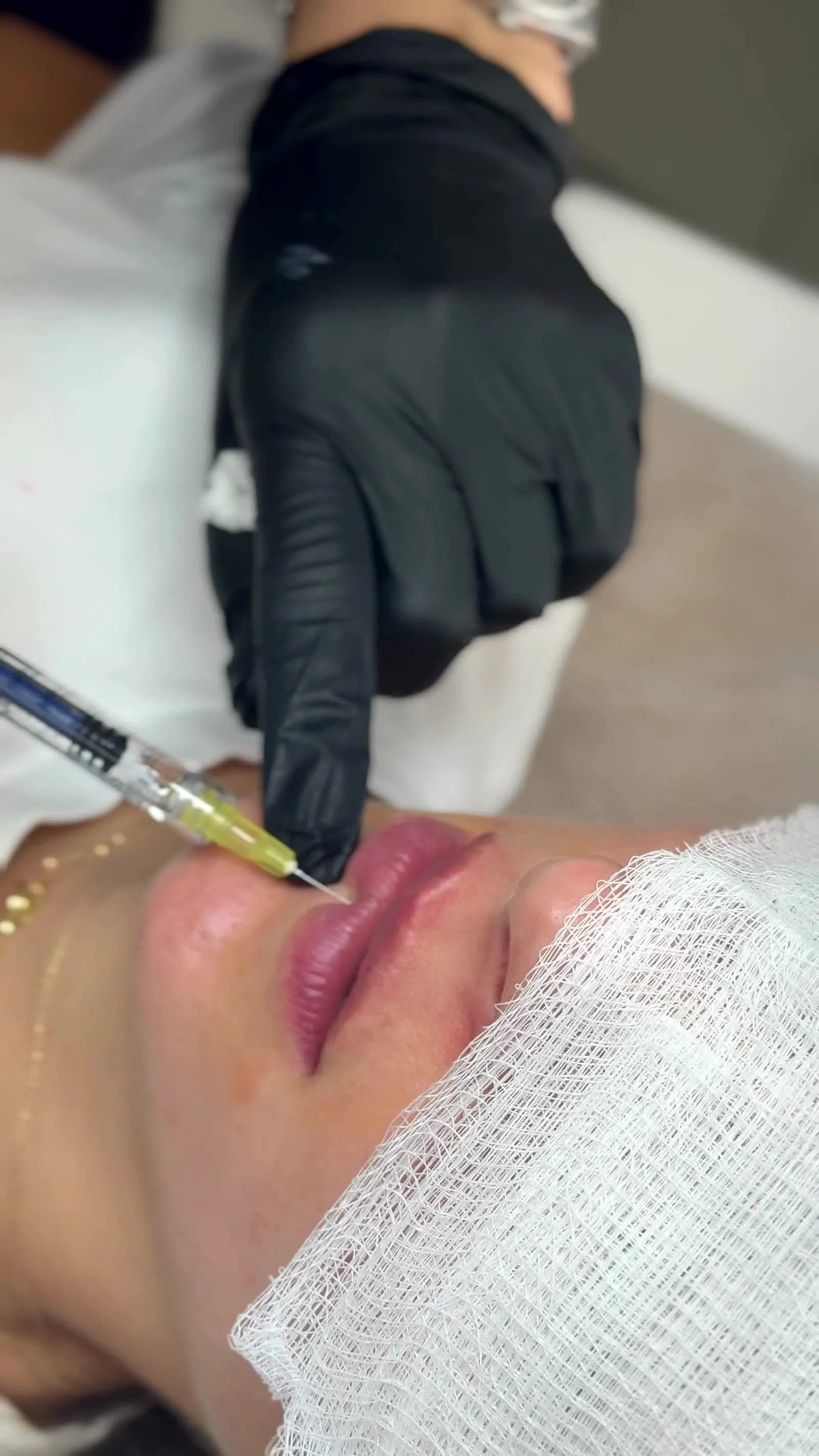
How long does lip filler last, and what affects it
By the Estetika Med Spa · · 4 min read
For most people, lip filler lasts between 6 and 18 months before the body gradually metabolizes the hyaluronic acid. Thinner formulas placed in high-movement areas tend to break down faster. A touch-up schedule depends on the product used, how your body processes it, and the look you want to maintain.
If you’re searching how long does lip filler last, you probably want a straight answer before booking anything. The honest one: for most people, lip filler lasts somewhere between 6 and 18 months, and that range exists because several real factors push results in one direction or the other. Understanding those factors helps you plan, set a realistic touch-up schedule, and avoid surprises.
What lip filler is actually made of
Most lip fillers used today are based on hyaluronic acid, a substance the body already produces. The FDA has cleared several hyaluronic acid fillers for lip augmentation and perioral use. Because the material is not permanent, the body gradually metabolizes it over months. That gradual breakdown is what determines duration, and it varies from person to person.
Some fillers use other materials, but hyaluronic acid products remain the most common choice for lips because results are adjustable and, if needed, the filler can be dissolved with an enzyme called hyaluronidase.
Why results vary so much between patients
A 6-month result and an 18-month result can both be completely normal. The difference usually comes down to a few consistent patterns:
- Metabolic rate. Patients with a faster metabolism tend to break down the product more quickly.
- Product density. Thicker formulas generally last longer in the lips than softer ones, though softer products often feel more natural in high-movement areas.
- Injection depth and placement. Filler placed in zones where the lips move constantly, like the center of the upper lip, tends to break down sooner than filler along the border.
- Volume added. A subtle result using less product may not last as long as a more built-up look, because there is less material to sustain over time.
- Lifestyle. Significant sun exposure, smoking, and intense physical activity can accelerate how quickly the body processes the filler.
The American Society of Plastic Surgeons notes that individual variation in how the body responds to injectable materials is one of the primary reasons duration ranges are wide.
What typically happens at the one-year mark
Many patients notice that the lips start to return toward their baseline somewhere between 9 and 14 months after treatment. The change is gradual, and for most people there is no sudden drop-off. Volume decreases slowly, borders soften, and the lip settles back toward its original shape.
At Estetika, we prefer to schedule a reassessment before the filler is completely gone. Maintaining shape with a smaller touch-up is usually simpler than rebuilding from zero.
Coming in for a touch-up while some filler remains means less product is needed and the lips stay consistent over time. Waiting until everything has fully dissolved and then starting over is a valid approach too, but the cycle tends to feel less smooth.
Touch-up timing: how to think about it
There is no single correct interval. Some patients prefer to come in every 9 months; others stretch to 15 or 18 months and are comfortable with the gradual change. A few find that after consistent treatments over a couple of years, their results hold longer because the lips have adapted to retaining the material.
The decision comes down to what you want to maintain. If a defined border matters to you, you will likely want to return sooner. If overall softness is the goal and you are comfortable with some fading, you can wait longer.
Our injectables page covers the range of filler products available at the clinic and what each is typically suited for.
What lip filler does not fix
Lip filler adds volume and can refine the border. It does not address vertical lip lines caused by repeated muscle movement, and it is not the right tool for significant asymmetry rooted in bone structure. For fine lines above the lip, the American Academy of Dermatology points to neuromodulators like Botox or Dysport as a more effective option, sometimes used alongside filler rather than instead of it.
Filler also does not stop the aging process. It works within the current state of the lip and surrounding tissue.
Who should think carefully before booking
Lip filler is not appropriate for everyone. Patients who are pregnant or breastfeeding are generally advised to wait. Those with active cold sores or oral herpes should discuss timing with their provider, since the injection process can trigger an outbreak in people with a history of them. Patients on blood thinners may experience more bruising, and the risk-benefit conversation belongs in a consultation, not an article.
Anyone with a history of severe allergic reactions or known sensitivity to any filler ingredient needs a thorough intake before treatment.
If you are unsure whether this is the right moment, our frequently asked questions covers common concerns patients bring to their first appointment.
What to expect at the appointment
Most lip filler appointments take under an hour from the time the numbing cream goes on to when you leave. The injector will review your anatomy, discuss what you want, and select a product and placement plan. You will not leave with a finalized result: swelling in the first 48 to 72 hours is part of the process, and the final shape settles over one to two weeks for most people.
Light bruising is common and usually resolves within a week. Avoiding intense exercise and heat exposure for a day or two after the appointment can help the swelling resolve more quickly.
If you want to know exactly how long results might last for your lips specifically, the only way to get a real answer is to have someone look at your anatomy and history. Book a consultation at Estetika and we can walk through what to expect, what product makes sense, and what a realistic touch-up schedule looks like for you.
Frequently asked questions
Does lip filler last longer after multiple sessions?
For many patients, repeated treatments can extend how long results hold because the lips retain some of the hyaluronic acid over time. There is no certainty, but consistency tends to support longer-lasting volume. Your injector can review your history and recommend a realistic schedule.
What makes lip filler dissolve faster?
High metabolic rate, frequent sun exposure, intense physical activity, and smoking can all speed up how quickly the body breaks down hyaluronic acid filler. Choosing a denser formula for the lips can slow that process. Your injector selects the product based on your anatomy and goals.
Can lip filler be dissolved if I don't like the result?
Yes. Hyaluronic acid fillers can be dissolved with hyaluronidase, an enzyme that breaks them down relatively quickly. This is one reason most practitioners prefer hyaluronic acid products over permanent or semi-permanent alternatives. The process is done in-office and usually takes effect within a day or two.
Is there anything I can do to make lip filler last longer?
Protecting the lips from sun damage, staying hydrated, and avoiding very intense cardio in the first weeks after treatment may help. Some patients schedule touch-ups before the filler is fully gone, which can preserve the shape with less product each time. Your injector can advise based on how your body responds.
Does lip filler hurt and what is the recovery like?
Most patients describe the sensation as mild pressure. Topical numbing cream is typically applied beforehand, and many fillers contain lidocaine. Swelling and light bruising are common in the first few days and usually resolve within a week for most people.
Sources
- American Academy of Dermatology
- U.S. Food and Drug Administration
- American Society of Plastic Surgeons
Educational content. It does not replace a medical consultation at Estetika Med Spa.
Keep reading
Where to have it done in South Florida
Estetika is at 400 E Hallandale Beach Blvd, Hallandale Beach, Florida, 8 minutes from Aventura. Many patients also drive in from Hollywood, 11 minutes away. Consultations are in English or Spanish.